
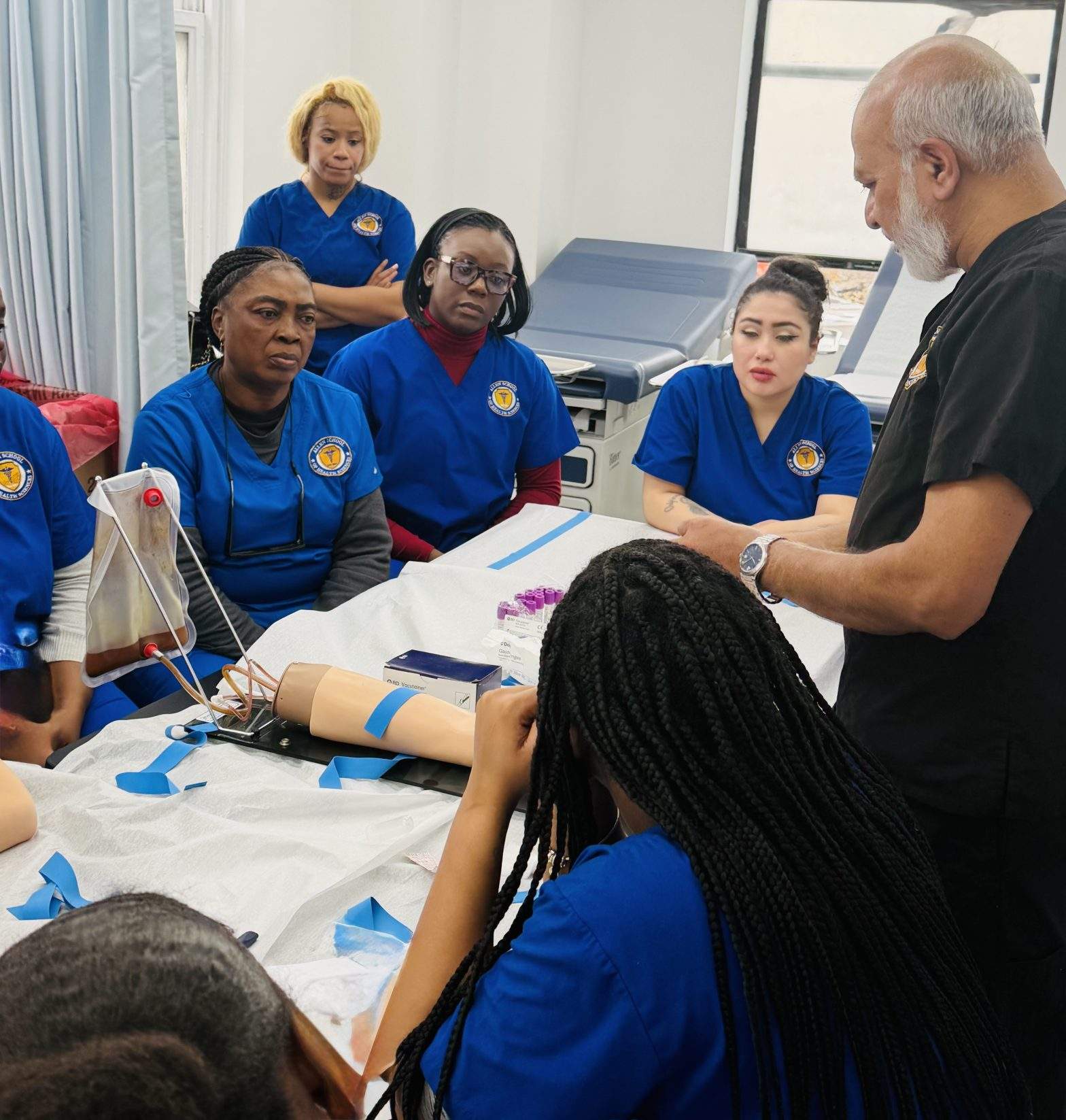
What to Expect in Your First 90 Days of Medical Assistant Training
Starting medical assistant training is an exciting step toward a healthcare career, but the first 90 days can feel like a big transition. You’re learning new systems, new terminology, and what it truly means to prepare for work in a medical setting. Knowing what to expect during this early phase can help you feel confident, focused, and ready to succeed.
At the Allen School of Health Sciences, the first 90 days of the Medical Assisting Program are structured around Module 1 and Module 2, each lasting five weeks. By the end of this period, students are finishing Module 2 and preparing to move into Module 3, where clinical skills become more hands-on.
Orientation and Early Program Onboarding
Before classes begin, students participate in orientation, where most onboarding is completed. This is where you’ll meet instructors, connect with classmates, and learn how the program is structured from start to finish.
During orientation, students are introduced to:
- Academic expectations and attendance requirements
- Online tools and classroom technology
- Student support services and available resources
- Program policies and professional standards
Orientation helps students transition from the idea of “going back to school” to actively stepping into a professional healthcare education environment. It also lays the groundwork for staying organized and engaged throughout the program.
Module 1 (Weeks 1–5): Building the Foundation
The first five weeks focus on essential knowledge and skills that prepare students for success in both healthcare and professional office environments.
In Module 1, students are introduced to:
- Introduction to Computers, building comfort with basic technology used in modern medical offices
- Business English, strengthening written and verbal communication skills
- Anatomy and Physiology, with a focus on the circulatory and respiratory systems
- Medical Law and Ethics, covering patient rights, confidentiality, and professional responsibility
This module helps students develop confidence with terminology, systems, and professional expectations before moving into more specialized healthcare topics.
Module 2 (Weeks 6–10): Office Readiness and Patient Safety
As students progress into Module 2, the focus shifts toward medical office functionality and patient-centered safety practices.
During Module 2, students learn:
- Introduction to Word Processing, supporting accurate documentation and office efficiency
- Professional Office Practices, including organization, workflow, and administrative responsibilities
- Patient Safety, Medical Emergencies, and First Aid, introducing core safety protocols used in healthcare settings
By the end of Module 2, students have a strong understanding of how a medical office operates and the importance of safety, communication, and professionalism in patient care.
Skills You’re Developing in the First 90 Days
While advanced clinical procedures come later in the program, the first 90 days focus on building essential foundational skills, including:
- Professional communication and workplace etiquette
- Basic computer and documentation skills
- Understanding patient safety and emergency response principles
- Familiarity with medical terminology and body systems
- Time management and study habits needed for a fast-paced program
These skills prepare students for the more hands-on clinical training that begins as they move into Module 3.
Preparing to Transition Into Module 3
As students complete Module 2, they begin preparing to enter Module 3, where coursework expands into:
- Clinical office procedures
- Anatomy and physiology of additional body systems
- Interpersonal communication in healthcare settings
- Introduction to assisting, examinations, and basic pharmacy concepts
By this point, students are more comfortable in the learning environment and ready to apply their foundational knowledge in more practical, clinical contexts.
How Allen School Supports You Along the Way
Throughout the program, students receive ongoing support from instructors, student services, and career services teams. Regular check-ins, academic guidance, and access to resources help ensure students stay on track and motivated.
This structured support is a key part of the Allen School experience, helping students balance coursework while preparing for externship and future employment in healthcare.
Start Strong in Your Medical Assistant Journey
Your first 90 days at Allen School are about building confidence, mastering the basics, and preparing for the hands-on training ahead. By completing Modules 1 and 2, students gain the knowledge and professional foundation needed to succeed as they move deeper into the Medical Assisting Program.
If you’re ready to take the next step toward a career in healthcare, Allen School of Health Sciences can help you turn your goals into action.
For more information about how to enroll in our medical assistant training programs in Phoenix, Brooklyn, and Jamaica, NY, contact the Allen School today.