
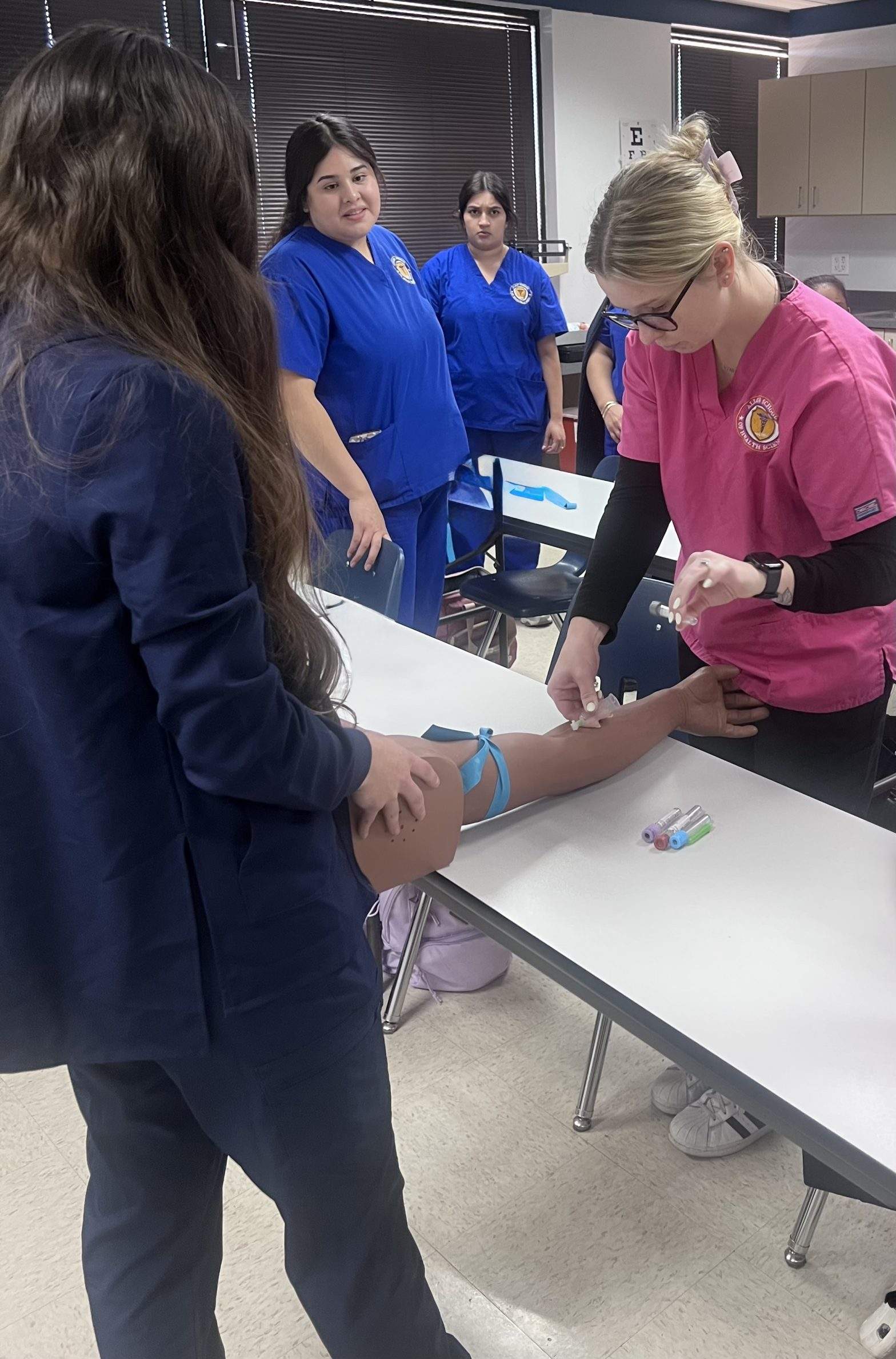
Phlebotomy is a key component of the Allen School of Health Sciences’ Medical Assistant Program for several important reasons:
- Essential Skill for Medical Assistants: Blood collection is a fundamental task performed by medical assistants in various healthcare settings. Proficiency in phlebotomy ensures that graduates are well-equipped to handle this responsibility.
- Comprehensive Patient Care: Understanding phlebotomy allows medical assistants to provide better overall patient care. They can explain procedures, alleviate patient concerns, and ensure samples are collected accurately and safely.
- Diagnostic Importance: Many medical diagnoses rely on laboratory tests that require blood samples. Medical assistants trained in phlebotomy can facilitate this process, enhancing the efficiency of patient care.
- Safety and Compliance: Proper training in phlebotomy emphasizes safety protocols, including infection control and proper handling of biohazard materials. This knowledge is crucial for maintaining a safe environment for both patients and healthcare providers.
- Hands-On Experience: Offering phlebotomy training as part of the curriculum provides students with practical experience, increasing their confidence and competence in clinical settings.
- Employability: Proficiency in phlebotomy makes graduates more attractive to employers, distinguishing them in a competitive job market. Many healthcare facilities prefer candidates who have multiple skills, including blood collection.
- Interdisciplinary Collaboration: Medical assistants often work alongside phlebotomists, laboratory technicians, and healthcare providers. Understanding phlebotomy helps MAs communicate more effectively and collaborate within healthcare teams.
- Diverse Work Opportunities: Skills in phlebotomy open doors to various roles within healthcare, allowing medical assistants to work in different environments, such as hospitals, clinics, laboratories, and research facilities.
At the Allen School of Health Sciences, we want to ensure our students are prepared to obtain a usable sample of blood for diagnostic testing and utilizing venipuncture and skin/finger puncture, while applying OSHA Bloodborne Pathogen Standards. By incorporating phlebotomy into the Medical Assistant Program, the Allen School of Health Sciences ensures that students gain valuable, practical skills essential for delivering high-quality patient care and meeting the demands of the healthcare industry. To learn more about why phlebotomy, electrocardiography (EKG), routine laboratory tests and so much more are part of our hybrid medical assistant program, contact the Allen School today! www.allenschool