
Thinking about launching a healthcare career? You’re already making a smart decision. Healthcare is one of the fastest-growing industries in the country, and the demand for skilled professionals has never been higher. But when it comes to choosing your training path, the options can feel overwhelming.
Two popular routes often come up in conversation: the Licensed Practical Nurse (LPN) program and the Medical Assistant (MA) program. Both lead to rewarding careers helping patients. But they’re not the same — and for many aspiring healthcare workers, the Medical Assistant program at the Allen School of Health Sciences offers distinct advantages that can make a real difference in your career launch.
Let’s break it down.
1. Get to Work Faster
Program Length: A Year vs. Two Years
Time is one of the most valuable resources you have. LPN programs typically require 12 to 18 months of full-time study, while some extend up to two years depending on the institution and curriculum requirements.
The Allen School’s Medical Assistant program can be potentially completed in 9 months. That means:
- You can enter the workforce sooner.
- You can start earning a paycheck faster.
- You can build real-world experience while others are still in school.
For people who need to support themselves or their families, or who simply don’t want to delay their careers, the MA program offers a compelling timeline advantage.
2. Lower Cost, Less Financial Burden
Tuition and Training Expenses
The cost of education is a real concern. LPN programs carry higher tuition due to the length of the program, clinical requirements, and the scope of medical training involved. Students often take on significant debt before they’ve earned their first dollar as healthcare professionals.
Medical Assistant programs are generally more affordable. The Allen School of Health Sciences is committed to accessible education with financial aid options available to those students who apply and qualify. This helps students manage costs. A lower overall investment means:
- Less student debt at graduation
- A faster return on your educational investment
- Greater financial flexibility as you begin your career.
When you’re weighing your future earning potential against your upfront costs, the math often favors the Medical Assistant path.
3. Versatile Skills That Open Many Doors
What You’ll Learn as a Medical Assistant
Medical Assistants are some of the most versatile professionals in healthcare. Where LPNs are trained to provide direct nursing care — primarily in clinical settings — Medical Assistants are trained in both administrative and clinical functions.
At Allen School, the Medical Assistant curriculum includes:
- Taking and recording patient vital signs
- Assisting physicians during examinations and procedures
- Drawing blood and collecting lab specimens (phlebotomy)
- Administering Electrocardiograms (EKG) as directed
- Scheduling appointments and managing medical records
- Handling insurance billing and coding basics
- Patient communication and front-office operations
This dual-skill set can potentially make Medical Assistants indispensable in medical offices, clinics, outpatient centers, specialty practices, and more. You’re not just a clinical worker — you’re a healthcare generalist who keeps practices running.
“Medical Assistants are the backbone of many physician offices. Their ability to work both the front desk and the exam room makes them uniquely valuable in today’s healthcare environment.”
4. High Demand, Strong Job Market
Career Outlook for Medical Assistants
According to the U.S. Bureau of Labor Statistics, employment for Medical Assistants is projected to grow 12%, between 2024 -2034 much faster than the average for all occupations. https://www.bls.gov/ooh/healthcare/medical-assistants.htm
By contrast, employment growth for Licensed Practical Nurses (LPNs) is projected at just 3% over the same period – a rate described as merely as fast as average. https://www.bls.gov/ooh/healthcare/licensed-practical-and-licensed-vocational-nurses.htm
This difference in projected growth shows why a medical assistant career path can be one of the promising entry points into healthcare today.
As the healthcare industry expands — particularly in outpatient settings — the demand for medical assistants continues to rise.
Why? Because healthcare delivery is shifting. More care is moving out of hospitals and into physician offices, urgent care clinics, and specialty practices. Medical Assistants are perfectly positioned to fill that growing need.
Allen School graduates are sought after by employers throughout their communities, and while the Allen School of Health Sciences can’t guarantee job placement the school’s career services team actively supports students in finding placement upon graduation.
5. Less Stressful Licensing Requirements
Certification vs. State Licensure
One of the more demanding aspects of becoming an LPN is the licensing process. After completing their program, LPN candidates must pass the NCLEX-PN exam — a comprehensive licensure examination regulated at the state level. Failing this exam means delays, additional costs, and more study time before you can work.
Medical Assistants, by contrast, can pursue national certifications such as the Certified Medical Assistant (CMA) through the AAMA or the Registered Medical Assistant (RMA) through AMT. These certifications are widely recognized and respected, but the pathway can be generally more accessible.
Allen School prepares students, so they have the opportunity to pass these certification exams, integrating the training into the curriculum, so you feel ready and confident on test day. It is also important to note that although these exams are respected, you do Not have to pass these exams to work as a Medical Assistant.
6. A Steppingstone, Not a Dead End
Career Growth and Advancement
Some students wonder: “Is being a Medical Assistant limiting?” The short answer is no — it can be the beginning of a long and fulfilling career in healthcare.
Many Medical Assistants go on to:
- Specialize in areas like cardiology, dermatology, or pediatrics.
- Moving into healthcare management or administration roles
- Pursing additional education in nursing, healthcare management, or allied health fields
- Take on supervisory or training roles within their practices.
Your experience as an MA gives you a foundation of practical, hands-on healthcare knowledge that serves you no matter where your career leads.
7. The Allen School Difference
Why Choose Allen School of Health Sciences?
Choosing a program is about more than the credential at the end — it’s about the quality of the education, the support you receive, and the network you build. The Allen School of Health Sciences has been training healthcare professionals for decades, with a focus on career-ready graduates who hit the ground running.
Here’s what sets Allen School apart:
- Experienced instructors with real-world clinical and administrative backgrounds
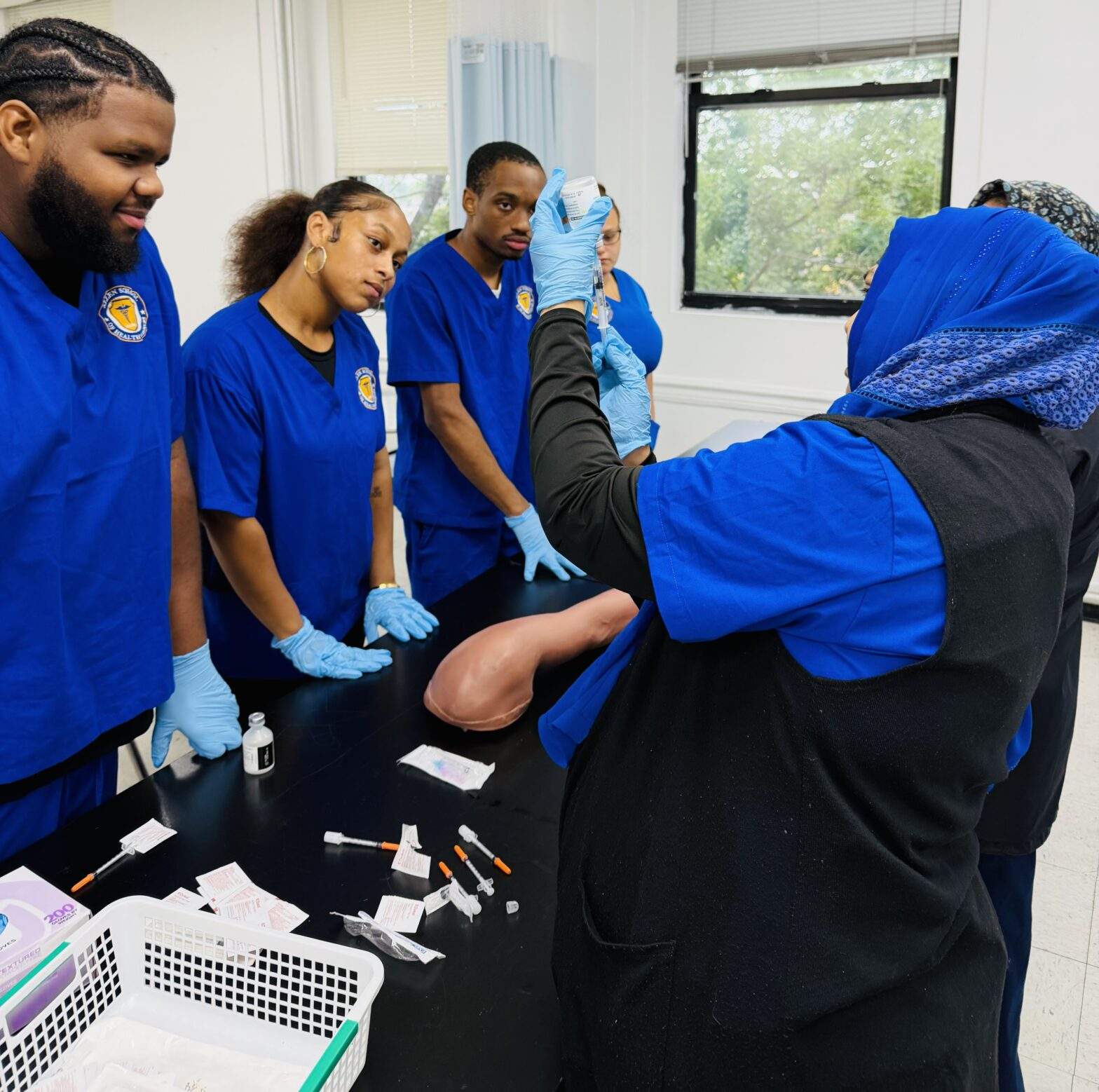
- Hands-on training in a clinical classroom
- Small class sizes for personalized attention
- Internship placements as part of your program that provide real workplace experience before graduation.
- Dedicated career services to help you find employment after completing the program. Note: The Allen School of Heath Sciences cannot guarantee job placement.
- A supportive, community-focused learning environment
The Allen School isn’t just preparing you for a job — it’s preparing you for a career.
Quick Comparison: LPN Program vs. Allen School MA Program
| Category | LPN Program | Allen School MA Program |
| Program Duration | 12–18+ months | 9 months — enter the workforce faster |
| Tuition Cost | Higher tuition and fees | More affordable; financial aid is available to those students who apply and qualify. |
| Skill Set | Clinical nursing focus | Dual skill: clinical + administrative |
| Credentialing | NCLEX-PN state licensure exam | CMA/RMA national certification is optional |
| Work Settings | Hospitals, long-term care, clinics | Medical offices, clinics, specialty practices, hospitals |
| Job Market Growth | Steady demand | Faster-than-average projected growth. https://www.bls.gov/ooh/healthcare/medical-assistants.htm |
| Career Support | Varies by program | Dedicated career services + internship placement |
| Career Flexibility | Primarily nursing roles | Clinical, admin, management pathways |
The Bottom Line
Both LPN programs and Medical Assistant programs lead to meaningful careers in healthcare. But for many students — especially those who want to enter the workforce quickly, keep costs manageable, and develop a versatile, highly marketable skill set — the Allen School of Health Sciences Medical Assistant program can be the smarter move.
You can potentially graduate faster. You’ll spend less. You’ll potentially be qualified for a wider range of roles. And you’ll have the full support of the Allen School community behind you every step of the way.
Ready to take the next step? Contact the Allen School of Health Sciences today to learn more about the Medical Assistant program and start your journey toward a rewarding healthcare career.
— Allen School of Health Sciences —
Training Tomorrow’s Healthcare Professionals Today